Course Details
Course Summary
This unique course offers a detailed look at the principles and physics behind geostationary orbits, perturbations, stationkeeping control requirements and many related topics. Lectures are focused on the reasons behind today’s satellite operations and control requirements. Attendees receive a fundamental grounding in orbital mechanics, perturbations, satellite maneuvering, orbit determination, constellation management, end-of-life maneuvers, co-location dynamics and space debris issues.
Course Materials
Each attendee will receive a CD copy of the PowerPoint presentation and a printed set of course materials.
Who Should Attend
This course is specially designed for commercial and government geostationary satellite operators and designers.
What You Will Learn
History and description of the geostationary orbits; Fundamentals of orbital mechanics; Establishing a geostationary orbit; Natural perturbations to geostationary orbits; Useful coordinate systems and transformations; Orbit determination methods; End-of-life maneuvers; Co-location and clustering techniques; Orbital debris issues that affect geostationary satellites
Course Outline
- Introduction to Geostationary Orbits
Key geostationary satellite and orbit references; Origin and definition of the geostationary orbit; Establishing the geostationary orbit
- Inertia and Moving Reference Frames
Earth-centered inertial (ECI) frame; Earth-centered Earth-fixed (ECEF) frame; Orbit-centered coordinates; Solar system geometry and reference frames - Fundamental Orbital Mechanics
Derivation of Keplerian elements; Adapted Keplerian elements; Two-Line and Cartesian elements - Orbit Determination Methods
Data collection methods; Least squares method; Kalman filtering - Geostationary Orbit Perturbations
Geometric approach to perturbation analysis; Gravity models and oblateness effects; Natural perturbations on GEO orbits; Stationkeeping requirements and strategies - Space Debris Issues
Understanding space debris; Geostationary debris issues; The Graveyard Orbit - Orbital Maneuvers
Single and multiple impulse adjustments;Plane rotation and combined maneuvers; End-of-life maneuvers and strategies - Co-location and clustering techniques
General equation of relative motion; Relative motion of two close satellites; Formation flying guidance and control techniques - Special Topics for Geostationary Satellites
Effect of Moon's Shadow on Geostationary Satellites; Using a lunar swing for geostationary injections; Estimating end-of-life propellant - Course Summary and Lessons Learned
Instructor
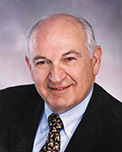
Marshall H. Kaplan, Ph.D., has been teaching courses on space technology since 1968. His career spans 35+ years of combined professional experience in the aerospace industry and in academia. Dr. Kaplan enjoys an international reputation as a lecturer on several subjects in astronautical engineering and is an expert in spacecraft and launch vehicle design, orbital mechanics and satellite dynamics and control. Dr. Kaplan was instrumental in the design and development of three-axis stabilized attitude control systems and stationkeeping techniques for geostationary satellites. He is the author of the widely acclaimed text, "Modern Spacecraft Dynamics and Control." Dr. Kaplan has authored three books and more than 100 papers and reports on various aspects of astronautics. He received advanced degrees in Aeronautics and Astronautics from M.I.T. and Stanford University, and he is a Fellow of the American Institute of Aeronautics and Astronautics and the American Astronautical Society.