The instructors completely changed how I approach spacecraft design. They are knowledgeable, approachable, and their practical lessons were directly applicable to my work.
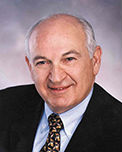
Marshall H. Kaplan, Ph.D.
Marshall H. Kaplan, Ph.D., is a recognized expert in launch vehicle systems design and engineering. He has participated in a number of new launch vehicle developments and has served as Chief Engineer on a fully reusable and an expendable launch system. Dr. Kaplan is a member of the National Research Council’s Committee on Reusable Launch Vehicle Technology and Test Program and has trained organizations that have won launch system contracts for military and commercial applications. He has over 35 years of academic and industrial experience, served as Professor of Aerospace Engineering at the Pennsylvania State University, was the executive Director of a Space Research Institute, and has presented launch vehicle courses in the U.S., Europe, and South America. In addition to publishing some 100 papers, reports, and articles on aerospace technologies, he is the author of several books, including the internationally used text, Modern Spacecraft Dynamics and Control. Dr. Kaplan is a member of the AIAA Technical Committee on Space Transportation and holds advanced degrees from MIT and Stanford University.
Bill Purdy
Bill Purdy has 22 years of hands-on experience in the space engineering field with wide-ranging involvement in both spacecraft mechanisms and systems engineering disciplines. Mr. Purdy has been one of the leaders of the space mechanism industry’s transition from explosive release mechanisms to non-explosive devices. His involvement in numerous space endeavors includes key roles on over 25 successfully flown spacecraft, work on over 30 flown mechanisms, including gimbals, release mechanisms, deployables and many other types of mechanisms. As an educator and space industry consultant to both government and industry, Mr. Purdy applies this broad experience to bring out a clear understanding of the space mechanisms, definition, resolution, and integration of mechanism requirements and their relationship to the overall system program success. Mr. Purdy was the Associate Editor of the industry-standard handbook Space Vehicle Mechanisms – Elements of Successful Design and was the author of the chapter on non-explosive release mechanisms. He has published seven Aerospace Mechanisms Symposia Papers and was the 1999 winner of the Herzl Award. Mr. Purdy holds a BSME from the University of Maryland.
Leon E. McKinney
Leon McKinney has 30 years of experience in system concept synthesis, design, performance assessment, optimization, and mission analyses. He has participated in a wide range of programs for the Department of Defense, the National Reconnaissance Organization, the Ballistic Missile Organization, the Strategic Defense Initiative, and NASA, including Shuttle, Shuttle Launch Dispenser, Peacekeeper, SICBM, Trident, AMaRV, X-43, and X-51. Mr. McKinney has participated in many advanced vehicle development programs, including AMLS, TAV, Copper Canyon, NASP, STAS, ALS, NLS, DSV, Smart MaRV, MSTART, ABLV, SLI, RMLS, NGLT, CAV, FALCON, and HIFIRE. He has been involved in a number of other national security projects, including support of National Intelligence Estimate activities. Mr. McKinney currently provides system analysis support to many government agencies and contractors on various aerospace and defense programs and also provides technical and policy support to Congress. He is an AIAA Associate Fellow and serves on AIAA’s Technical Activities, Public Policy, Space Transportation, and Hypersonic Technologies & Systems Programs Committees. Mr. McKinney holds BS and MS degrees in Aerospace Engineering from Purdue University.
Steven R. Vernon
Steven R. Vernon has over 25 years of experience primarily focused on launch vehicle payload integration, and spacecraft mechanical system and mechanisms design, assembly, test, and launch operations. He has led and managed payload-to-launch vehicle integration efforts and launch campaigns on nuclear and conventional powered spacecraft and payload-supplied upper stages successfully launched from both the US Eastern and Western Ranges. Mr. Vernon has authored or co-authored more than 20 formal publications covering launch vehicle payload integration, spacecraft mechanical systems, spacecraft structures, and mechanisms. He is the recipient of several NASA and Department of Defense Group Achievement and Civilian Contractor awards and has participated in Standing Review Boards for several NASA interplanetary and near-Earth missions.
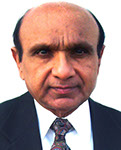
Mukund R. Patel, Ph.D., P.E.
Mukund R. Patel, Ph.D., P.E., has 50 years of hands-on experience in research, development, design, and education of the state-of-the-art electrical power equipment and systems. He has served as Principal Engineer at General Electric; Fellow Engineer at Westinghouse Research Center; Senior Staff Engineer at Lockheed Martin; Development Manager at Bharat Bijlee (Siemens), Mumbai, India; and 3M McKnight Distinguished Visiting Professor at the University of Minnesota. He is currently a Professor at the U.S. Merchant Marine Academy. Dr. Patel obtained his Ph.D. degree in Electrical Power from the Rensselaer Polytechnic Institute; M.S. in Engineering Management from the University of Pittsburgh; M.E. in Electrical Machine Design from Gujarat University; and B.E. from Sardar University, India. He is a Fellow of the Institution of Mechanical Engineers (U.K.), Associate Fellow of the American Institute of Aeronautics and Astronautics, Senior Life Member of IEEE, Registered Professional Engineer, and a Chartered Mechanical Engineer in the United Kingdom.
Dr. Patel is an Associate Editor of Solar Energy, the journal of the International Solar Energy Society, and a member of the review panels for research projects on renewable energy in the State of California and the Emirate of Qatar. He has taught 3-day courses to practicing engineers in the electrical power industry for over 20 years, has presented and published over 50 papers at national and international conferences and journals, holds several patents, and has earned NASA recognition for exceptional contribution to the power system design for the Upper Atmosphere Research Satellite. He has authored a book, Spacecraft Power Systems, and a chapter on Electrical Power in the International Handbook on Space Technologies to be published in 2012.
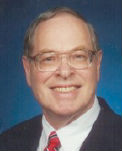
Carl Zweben, Ph.D.
Dr. Zweben, an independent consultant on composites and advanced thermal management materials, was for many years Advanced Technology Manager and Division Fellow at GE Astro Space, later acquired by Lockheed Martin, where he managed the Composites Center of Excellence. Other affiliations have included Du Pont, Jet Propulsion Laboratory, and the Georgia Institute of Technology NSF Electronic Packaging Research Center. Dr. Zweben was the first, and one of only two winners of both the GE One-in-a-Thousand and Engineer of the Year awards. He is a Life Fellow of ASME, a Fellow of ASM and SAMPE, and an Associate Fellow of AIAA. He has been a Distinguished Lecturer for AIAA and ASME. He is an internationally recognized composites expert, with over 40 years of commercial and aerospace experience in polymer matrix-, metal matrix-, ceramic matrix-, and carbon matrix composite materials technology, including: design, manufacturing, product development, material development and characterization, test method development, and basic research in micromechanics and material behavior. Dr. Zweben pioneered a wide range of commercial and aerospace composite applications, including spacecraft and aircraft structures, mechanisms, machine components, rocket motor cases, thermal control, microelectronic and photonic packaging, marine structures, Civil Engineering structures, automobiles, rapid transit vehicles, robots, wind turbines, flywheels, antennas, and pressure vessels. He has performed market studies and advised GE Corporate Headquarters and GE Plastics on acquisitions and joint ventures. Dr. Zweben has to his credit well over 100 contributions to journals, handbook,s and encyclopedias, and has presented more than 100 invited lectures, including one at the AIAA 50th Anniversary “Learn from the Masters” series. He is Co-Editor-in-Chief, with Dr. Anthony Kelly, CBE, FRS, of the 6- volume “Comprehensive Composite Materials”. Dr. Zweben has directed and lectured at over 250 classroom, satellite broadcast, videotape, and online short courses in the US, Europe, and Asia. He has consulted for numerous national and governmental organizations, including the National Academy of Sciences, NASA, Department of Defense, and Department of Energy. Industrial clients have included Boeing, GE Aircraft Engines, General Dynamics, Hughes, BAE Systems, Lockheed Martin, Hitco Carbon Composites, BP-Amoco, Cytec Carbon Fibers, GE Advanced Materials, Poco Graphite, Reynolds Metals Company, Rogers Corporation, Zyvex Corporation, Beacon Power, MRSI, Nokia, Princeton University High Energy Physics Group, Knolls Atomic Power Laboratory and other Fortune 500 companies.
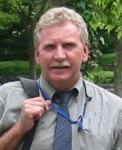
Jim Haughton
Jim Haughton is an engineer with extensive experience in structural dynamics testing of aerospace, mechanical, and electrical systems. He specializes in launch environment analysis, acoustic, vibration, and modal survey testing of spacecraft. His aerospace work has been primarily through the Naval Research Laboratory’s Naval Center for Space Technology and NASA Goddard Space Flight Center. He has also supported many design and testing review efforts, including the NASA Plumbrook VTC and the National Polar-orbiting Operational Environmental Satellite System (NPOESS). He has a BSME degree from Manhattan College, Bronx, N.Y., and he has been the President of and Structural Test Engineer for Kinetic Research Corp since 1985. Jim is a licensed professional engineer in the state of Maryland.
Launchspace instructors specialize in spacecraft systems, launch vehicles, payload integration, mechanical and electrical systems, composites, and mission operations. Their training covers both technical and practical aspects of aerospace programs.
Yes. Instructors combine real-world experience with teaching expertise, offering hands-on exercises, case studies, and simulations that prepare students for mission-critical aerospace tasks.
Trusted by Leading Organizations
Launchspace works closely with top organizations in the aerospace field, providing expert guidance and support on complex space programs. Our clients include government agencies, commercial space companies, and international organizations, all benefiting from our extensive experience and practical solutions.



We focus on building lasting partnerships, helping teams improve efficiency, drive innovation, and achieve success in challenging aerospace projects. For more information, contact us today.
Call Us TodayHear From Our Learners
Our courses are led by instructors with decades of hands-on experience in space programs. Here’s what students have shared about their learning experiences with our expert team:
Sarah Williams
Learning from the instructors was an excellent experience. Their guidance helped me understand complex spacecraft and launch systems in a clear and practical way.
David Kim
The instructors’ hands-on approach allowed our team across multiple locations to gain skills we could immediately apply to ongoing projects.
Penelope Hardgrove
The international perspective the instructors brought to the classroom was invaluable. Collaborating with peers globally, under their guidance, gave me technical insights I hadn’t experienced before.
Thomas Becker
The instructors enhanced my technical skills and improved the way I approach project planning. Their mentorship made a real difference in efficiency.
Ana Morales
The instructors stand out for their real-world expertise. They made complex concepts easy to understand, while also sharing practical approaches for problem-solving.
Mark Johnson
Their personalized guidance transformed our team’s capabilities. The instructors’ deep knowledge and practical teaching style made learning engaging and immediately useful.
Emily Chen
I highly recommend their courses. The instructors are experts who make challenging material accessible and provide mentorship that brings real value to any project.
Oliver Martinez
Students consistently praise Launchspace instructors for their practical knowledge, approachable teaching style, and hands-on guidance. Learners report gaining valuable skills, understanding complex aerospace concepts, and applying lessons directly to real-world projects.
Yes, learners highlight that the instructors’ mentorship significantly enhances technical skills, project planning abilities, and problem-solving approaches. Their extensive experience ensures training is both practical and immediately applicable to aerospace work.
Get in Touch With Us
Call Us
202-258-6133Email Us
Info@launchspace.comOur Location
Launchspace ServicesBethesda, Maryland
Start Your Journey
Fill out the form below to connect with us and learn more about our courses, guidance, and training opportunities.